Simply put, impulsivity is the motivation to act without foresight. As human beings, it is not uncommon to regret saying or doing something we wish we hadn’t done. However, some of us display these behaviours more frequently, even several times daily. That is where the red flag lies. If you or someone you know shows the following signs, this article is for you –
- Aggression and lack of temper control
- Restlessness
- Interrupting others
- Easy distractibility
In a study by Nigg et al., impulsivity is a tendency to respond impulsively in situations requiring a more thoughtful approach. Researchers identified three key factors that contribute to impulsivity –
- acting on impulse without much forethought,
- difficulty in focusing on the task at hand, and
- failing to plan and think through decisions carefully.
Biologically and neuropsychologically, impulsivity is characterised by the inability to control potentially harmful impulses for oneself or others. From a cognitive perspective, impulsivity refers to the failure to inhibit behavioural impulses and thoughts, with impulse control being a critical component of executive function. It significantly impacts one’s personal and social functioning. But does being impulsive in one area of life imply that a person will also show similar traits in other areas? Does impulsivity attract impulsivity? Let us explore this idea more.
Impulsivity is a personality trait that comes to act on the spur of the moment without considering the consequences. When someone has a high level of impulsivity in one area of their life, such as with drinking or spending, they may be more likely to exhibit impulsive behaviour in other areas. For example, someone struggling with alcohol addiction may also consume illegal substances or abuse their partner while drunk. Similarly, someone struggling to manage their finances may work with gambling or other impulsive behaviours.
Several theories and research explain why impulsivity in one area may lead to impulsivity in other regions. For example –
- A study published in the Journal of Substance Abuse Treatment found that individuals with alcohol use disorders were likelier to exhibit impulsive behaviours in other areas, such as gambling and sexual behaviour. The researchers suggested that these individuals may have underlying personality traits, such as sensation-seeking or a lack of self-control, contributing to impulsive behaviour in multiple domains. (Leeman et al., 2014).
- A study published in the Journal of Personality and Social Psychology found that individuals who had difficulty controlling their spending were likelier to exhibit impulsive behaviours in other areas, such as overeating and substance use. The researchers suggested that these individuals may have a general lack of self-control, contributing to impulsive behaviour in multiple domains. (Faber & O’Guinn, 1992).
- A meta-analysis published in the journal Addiction found that individuals with ADHD, a disorder often characterised by impulsivity, were more likely to exhibit a range of impulsive behaviours, including substance use, risky sexual behaviour, and gambling. The researchers suggested that impulsivity may be a core feature of ADHD, contributing to impulsive behaviour in multiple areas. (Barkley et al., 2008)
Whimsical Actions That Can Lead To Negative Consequences
- Substance abuse – Using drugs or alcohol impulsively can lead to addiction, physical health problems, and impaired judgment, resulting in accidents, injuries, or legal issues.
- Compulsive gambling – Gambling impulsively can lead to significant financial losses, debt, and strained relationships with loved ones.
- Overspending – Spending impulsively can lead to financial problems, debt, and stress, negatively impacting one’s mental health and relationships.
- Risky sexual behaviour – Engaging in impulsive sexual behaviour, such as unprotected sex, can lead to sexually transmitted infections, unintended pregnancies, and emotional distress.
- Casual speeding – Driving impulsively, such as speeding or running red lights, can lead to accidents, injuries, and even fatalities.
- Binge eating – Eating impulsively, such as binge eating or emotional eating, can lead to weight gain, obesity, and related health problems.
Self-Contagious Impulsive Habits
Unmindful and risky habits can often lead to other more dangerous impulsive habits. Many researchers see impulsivity as a personality trait characterised by a tendency to act on impulse rather than consider the consequences of one’s actions. When someone engages in one impulsive behaviour, it can make it easier for them to engage in others because they are already in a mindset of acting on impulse.
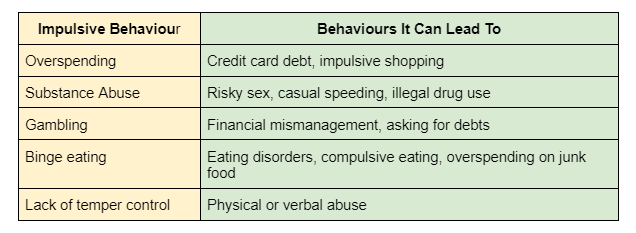
For example, studies have established a link between impulsive buying and credit card debt. A study by Roberts and Jones (2001) found that people who scored higher on impulsivity were more likely to have credit card debt, suggesting that impulsive buying can lead to financial problems and debt. Below is a table showing some common examples of impulsive tendencies that can potentially lead to other risky habits.
5 Strategies To Prevent Impulses From Spreading
Preventing one impulsive behaviour from transforming into another can be challenging, but some strategies may help –
-
Identify the triggers
Understanding the underlying triggers for impulsive behaviour can help you avoid situations that may lead to impulsive behaviour. For example, suppose you know that being around certain people or in specific environments triggers impulsive spending. In that case, you can avoid those situations or plan to reduce the risk of impulsive behaviour.
-
Be aware of your internal and external worlds
Mindfulness techniques, such as meditation or deep breathing, can help you become more aware of your thoughts, feelings, and behaviours and can help you pause before acting impulsively.
-
Develop alternative coping strategies
When you feel the urge to engage in impulsive behaviour, it can be helpful to have alternative coping strategies in place, such as exercise, journaling, or talking to a supportive friend or family member.
-
Seek professional help
If you are struggling with impulsive behaviour that negatively impacts your life, seek professional help from a therapist or counsellor who can provide guidance and support.
-
Be kind to yourself
Negative self-talk can lead to impulsive behaviour and make it difficult to control impulses. On the other hand, positive self-talk, such as reminding yourself of your goals and values, can help you stay focused and avoid impulsive behaviour.
Conclusion
Preventing one impulsive behaviour from transforming into another requires patience, practice, and self-awareness. It’s important to be kind to yourself and celebrate small victories. Seeking help on time can be a game changer if you want to break free from emotional dysregulation.
Impulsivity is an online hub where you can access expert help and support whenever needed. Developed by trained professionals and designed to match your own pace, our online impulsivity courses will help you better manage impulsive behaviours, like overeating, for good.
Explore all our impulsivity courses here.
Developed by a team led by Dr Yuliya Richard (a clinical psychologist specialising in Impulsivity), our courses use scientifically proven strategies to help you understand and overcome the specific impulsive behaviours affecting everyday life.
If you want to take charge of your life and manage your Impulsivity for good, we can help. Impulsivity offers a range of online courses that can guide you towards a healthier and happier life. So take our quick impulsivity test now to see if we can help!
References
- Leeman, R. F., Potenza, M. N., & Sofuoglu, M. (2014). Impulsivity, sensation-seeking, and substance use disorders. In Behavioral Addictions (pp. 25-44). Elsevier.
- Faber, R. J., & O’Guinn, T. C. (1992). A clinical screener for compulsive buying. Journal of Consumer Research, 19(3), 459-469.
- Barkley, R. A., Murphy, K. R., & Fischer, M. (2008). ADHD in adults: What the science says. Guilford Press.
- Roberts, J. A., & Jones, E. (2001). Money attitudes, credit card use, and compulsive buying among American college students. Journal of Consumer Affairs, 35(2), 213-240.