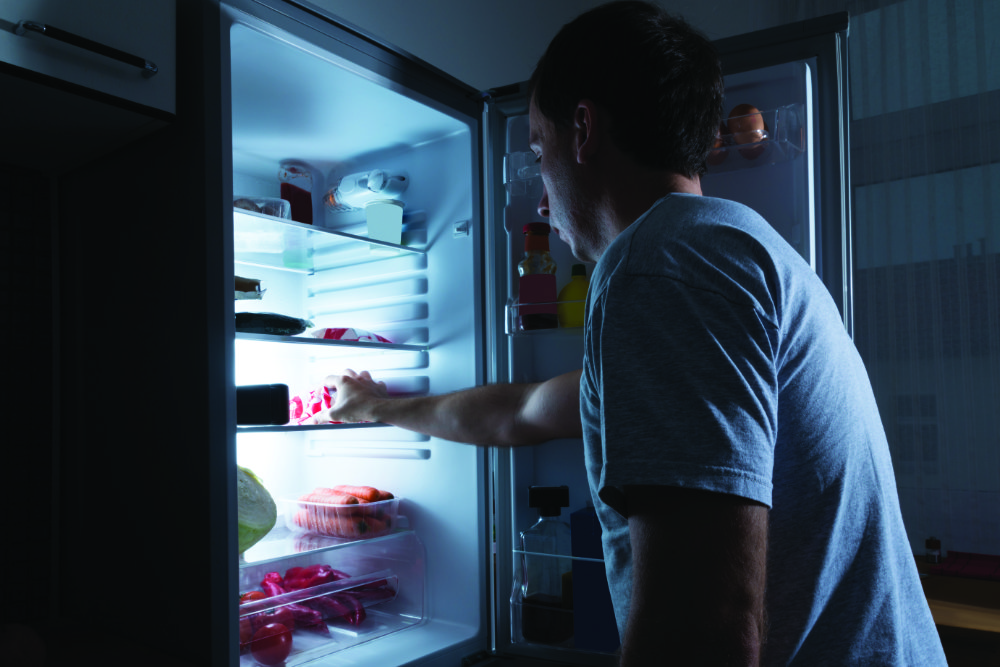
At 9:17 p.m. you swear you’ll skip takeaway tomorrow. At 9:23 you order pad thai. Nothing big changed in six minutes. The future just slipped out of reach. When “tomorrow” feels like a rumour, “I knew better” loses to “I did it anyway.”
The problem in one line
Impulsivity is a time-and-value glitch: your brain discounts future outcomes and overweights near-term dopamine. Not a morals failure. A mechanics issue.
Why smart people still pick the worse option
1) Delay discounting
The farther away a reward feels, the less we value it. Steeper discounting predicts overspending, overeating, substance lapses, and doom-scrolling.
Example:
- Option A: $120 sneakers now.
- Option B: +$120 in your account next Friday.
Your brain prices B as smaller because Friday feels far.
2) Distorted time perception (common in ADHD)
When “later” feels vague or unreal, the future loses bids. Lab tasks show reliable timing drift and estimation errors, which amplify discounting.
Example:
You plan a 20-minute scroll “break” and look up 65 minutes later. Internal time ran slow. The now got bigger.
3) Dopamine and context
Dopamine doesn’t “cause” impulsivity; it weights context. In a high-cue environment (ads, push alerts, open tabs, food on the bench), “now” gains mass and wins.
Example:
Card-on-file, 1-click checkout, payday evening. Context is preloaded for a fast “yes.”
Make the future feel closer: two high-leverage fixes
A) Episodic Future Thinking (EFT)
Vivid, date-stamped future scenes reduce discounting and shift choices.
90-second EFT drill
- Pick a real date 2–8 weeks away.
- Write one cue in sensory detail:
“15 July, 7:30 a.m. I open my banking app, see +$200, and feel relieved I skipped late-night UberEats.” - Read it before your risk window for 7 days.
Where to use it
- Money: before entering a store or opening a shopping app.
- Food: before dinner and again after 9 p.m.
- Screen time: before you sit on the couch.
B) Explicit-zero framing
State both sides with their “zeros” so the trade-off is concrete.
- “Buy $120 today and have $0 more next Friday”
vs - “Don’t buy today and have +$120 next Friday.”
People choose the delayed option more when the “nothing” is explicit. Use this aloud or on a sticky note.
Fast tools that stack with EFT
Timers beat intuition
Set a visible countdown for hot states: 15 minutes for scrolling, 30 for gaming, 10 for kitchen snacking. Internal time drifts; clocks don’t.
Pre-commit friction
- Remove card autofill.
- Use 24-hour cart holds.
- Lock the App Store at night.
- Keep snacks in an opaque bin on a high shelf.
Friction weakens the “now” bias by downgrading cues.
Future-self receipts
After every kept promise, log one line in Notes or paper:
- Skipped takeaway → +$28 Friday
- Closed TikTok at 10:15 → +45 min sleep
Immediate, tangible “wins” train the system to value later.
Playbooks by domain
Money: late-night spending
- Trigger: Payday + ads + boredom
- If/Then: If it’s after 9 p.m., then I only browse in “Wishlist,” not “Buy Now.”
- EFT cue: “1 Aug, 9:05 a.m., I transfer +$300 to savings. Feels clean.”
- Friction: Remove saved card; enable 24-hour hold.
- Zero frame: Say it aloud before checkout.
Eating: evening grazing
- Trigger: TV + open kitchen
- If/Then: If I want a snack after 8:30, then I eat at the bench, not the couch, and plate it.
- EFT cue: “Saturday tennis, lighter, faster, glad I stopped at one bowl.”
- Friction: Opaque containers; no snacks within arm’s reach of couch.
- Timer: 10-minute pause before seconds.
Scrolling: doom-loops
- Trigger: Couch + fatigue
- If/Then: If I open a social app, then timer = 15 minutes, phone goes on the table, not in hand.
- EFT cue: “6:20 a.m., I wake clear because I stopped at 10:30.”
- Friction: Delete one app; keep one. Move it to a folder called “Decisions.”
Anger: snap reactions
- Trigger: Felt disrespect + time pressure
- If/Then: If volume rises, then I pause 90 seconds, breathe 4-4-6, and ask one clarifying question before replying.
- EFT cue: “Tomorrow 11:00, partner smiles, we solved it without the blow-up.”
- Zero frame: “Say it sharp now and spend two days repairing vs say it steady now and keep momentum.”
One-week experiment
Day 1
- Identify your top one risky context (money, food, screens, anger).
- Write three EFT cues for it.
- Create one friction tweak.
Days 2–7
- Read one EFT cue before the risk window.
- Use explicit-zero on any purchase >$20, snack >300 kcal, or scroll >20 min.
- Track “future wins” on a card in your wallet or Notes app.
Target
- ≥ 4 wins out of 7 days.
- If you hit 6+, add a second habit next week.
For ADHD: why this hits harder
ADHD often pairs steeper discounting with altered temporal processing. “Now/not-now” replaces a precise clock, so near rewards win. Treat it as timing + framing, not willpower. Externalise time. Reduce cues. Script the future.
Bottom line
Fix the clock and the frame. Your choices improve without white-knuckle effort. Design beats discipline.
Enrol and train this properly
- Personal EFT scripts
- Explicit-zero routines
- Context and friction design
- Weekly tracking that sticksImpulsivity isn’t a character flaw. It’s a timing and valuation problem: the brain discounts future rewards and overweights immediate dopamine. This bias is stronger when time feels vague (common in ADHD) and when environments are rich in cues (one-click buys, push alerts, snacks in sight). You can shift choices without white-knuckling by making the future feel close and making the present a bit harder:
- Use Episodic Future Thinking (EFT): read a vivid, date-stamped cue before risk windows to lower delay discounting.
- Apply Explicit-Zero Framing: state both options with their “zeros” so trade-offs are concrete.
- Externalise time: timers beat intuition during hot states.
- Engineer friction: remove autofill, add 24-hour holds, hide cues.
- Reinforce wins now: log “future-self receipts” to pay yourself immediately for long-term choices.
Design beats discipline. Fix the clock and the frame and your behavior follows.
Train this with us: Enrol in Impulse & Fire: Anger and Impulsivity Management at impulsivity.com.
au for EFT scripting, explicit-zero routines, friction design, and weekly tracking.
References (APA)
Bickel, W. K., Koffarnus, M. N., Moody, L., & Wilson, A. G. (2021). Delay discounting in established and proposed behavioral addictions: Systematic review and meta-analysis. Frontiers in Behavioral Neuroscience, 15, 786358. https://doi.org/10.
Brown, A. L., Chua, Z., & Camerer, C. F. (2019). The framing of nothing and the psychology of choice. Journal of Economics and Finance, 43(4), 917–946. https://doi.org/10.
Chau, B. K. H., Sallet, J., Papageorgiou, G. K., Noonan, M. P., & Rushworth, M. F. S. (2018). Dopamine and reward: A view from the prefrontal cortex. Psychological Research, 82, 676–689. https://cogneuro.com.
Li, Z., Chen, C., & Ma, Y. (2025). Balancing risk and reward: Dopamine’s central role in economic decision-making. Brain Sciences, 15(8), 857. https://doi.org/10.3390/
Meyer, A. (2018). Framing effects in intertemporal choice: A nudge experiment. Journal of Behavioral and Experimental Finance, 18, 45–55. https://doi.org/10.
Noreika, V., Falter-Wagner, C. M., Rubia, K., & Bruns, P. (2023). Altered perceptual timing abilities in attention-deficit/
O’Donnell, S., Daniel, T. O., & Kober, H. (2022). Episodic future thinking predicts differences in delay discounting. Frontiers in Psychology, 13, 992245. https://doi.org/10.
Papké, E., et al. (2025). Narrative episodic future thinking reduces delay discounting and improves self-control. Journal of Behavioral Decision Making. https://doi.org/10.
Shum, K. K.-M., Zheng, Q., Wang, X., & Chiu, K. Y. (2021). Time perception deficits in children and adolescents with ADHD: A meta-analysis. Journal of Attention Disorders, 25(14), 1950–1966. https://doi.org/10.
Stein, J. S., Mellis, A. M., & Bickel, W. K. (2023). Art-delivered episodic future thinking reduces delay discounting: A randomized experiment. Addictive Behaviors Reports, 18, 100550. https://doi.org/10.
Story, G. W., Vlaev, I., Seymour, B., Darzi, A., & Dolan, R. J. (2014). Does temporal discounting explain unhealthy behavior? A systematic review and reinforcement learning perspective. Frontiers in Behavioral Neuroscience, 8, 76. https://doi.org/10.3389/
The Transmitter. (2024). Reconstructing dopamine’s link to reward. https://www.
Meyer, A. (2017). Framing effects in intertemporal choices: Three two-step experiments. Kyklos, 71(2), 332–358. https://doi.org/10.